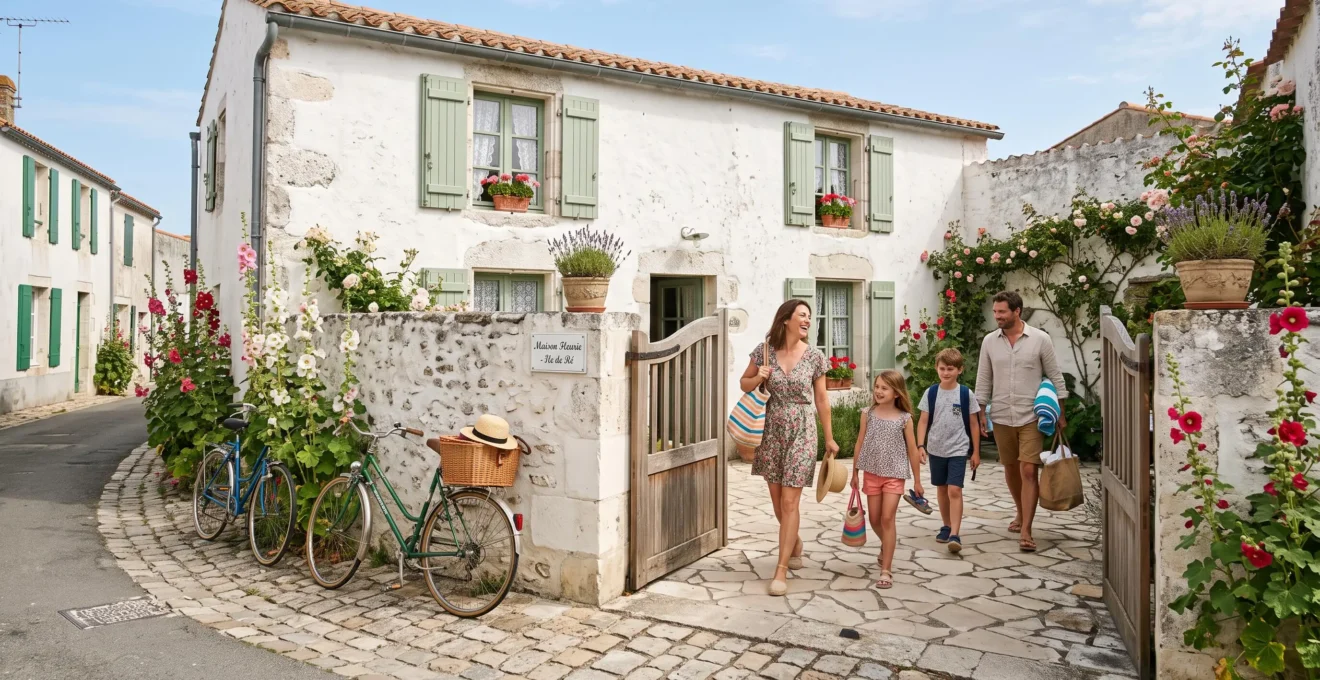
Direct answer: A private villa isn’t automatically better than a hotel on the Île de Ré. Choose a villa if you prioritise space, privacy and “living like a local”; choose a hotel if you want convenience, predictable services and minimal logistics—especially for a short stay.
If you’re planning a high-end break and keep circling the same question—villa vs hotel Île de Ré—the best way forward is to compare what you’ll actually get day to day: who handles the cleaning, where you’ll eat, how much privacy you’ll really have, and what might be charged as an extra.
The island context matters too. Accommodation availability can feel tight in peak periods, and the Île de Ré’s appeal (villages, markets, cycling) can make a villa feel like part of the experience—or make a well-located hotel feel like the smartest use of time.
Your decision in 30 seconds (villa vs hotel on the Île de Ré)
- Pick a villa if you want a private base (garden/terrace, kitchen, flexible routines) and you’re happy to manage a few practical details.
- Pick a hotel if you want services bundled (reception, housekeeping, breakfast) and you don’t want to think about logistics.
- For families and groups, villas can offer better comfort per person—but only if you verify extra fees and what’s included.
- For couples on a short stay, hotels often win on simplicity and location.
- In July–August, whichever you choose, plan earlier to keep options open.
What a Private Villa and a Hotel Actually Offer on the Île de Ré
If you want a fair comparison, start with structure: a private villa is an entire property rented to you (often self-catering), while a hotel is a serviced operation built around standardised daily support (reception, housekeeping, breakfast options).
On the Île de Ré, this difference tends to show up quickly in how you use your days. A villa usually gives you more living space (kitchen, lounge, outdoor area), while a hotel gives you less autonomy to manage (someone is on-site to handle practical issues).
So what do you actually “get” with each option?
With a private villa, you’re typically booking a whole home: you set your own schedule, cook if you want to, and treat the place as a base for beaches and villages. The trade-off is that many “hotel-like” touches depend on what the owner or agency includes (and what is charged separately).
With a hotel, you’re usually buying a simpler package: a room plus recurring services (front desk, daily cleaning, breakfast service depending on the property). You gain convenience and support, but you give up the feeling of having a home on the island.
Île de Ré demand can be very seasonal. One signal of how important holiday rentals are locally: INSEE notes that second homes represent at least half of the housing stock in three quarters of communes on the islands of Ré and Oléron, reaching 83% in Les Portes-en-Ré (a useful reminder that the furnished rental market is a major part of the island’s accommodation landscape). Source: données INSEE sur le logement insulaire.
Decision point for a premium stay: if “high-end” means service and effortless comfort, a hotel may fit better; if it means space and privacy, a villa is often closer to what you’re picturing.
Which Option Gives You More Privacy and Local Immersion?
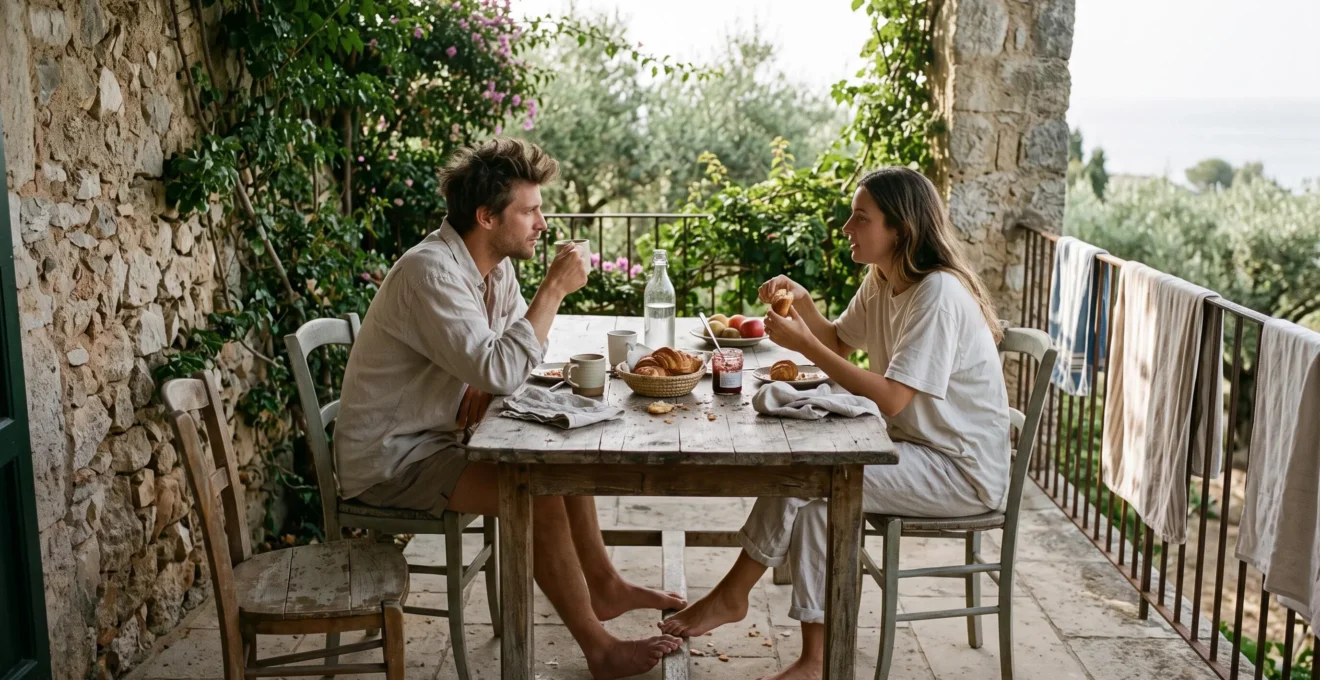
If privacy is your non-negotiable, a villa is hard to beat: you don’t share corridors, breakfast rooms, terraces, or pool areas with other guests. That sense of “this is your place” is often the core value of renting a private home.
Where hotels fight back is support and location. Many travellers prefer knowing there’s a reception desk, someone to ask about practicalities, and a predictable routine—especially if you’re on a shorter break and don’t want to spend time organising meals and day planning.
Which option feels more “Île de Ré” in practice?
A villa often nudges you into island routines: shopping at village markets, cycling out in the morning, coming back for a slow lunch, then heading out again. That rhythm matches the Île de Ré’s strengths—village-to-village exploring and outdoor living.
The official tourist office highlights that the island can be explored “on foot or by bicycle along more than 138 km of cycle paths”, linking the ten villages and key sights (including UNESCO-listed fortifications at Saint-Martin-de-Ré). Source: office de tourisme officiel Île de Ré.
Cas pratique
Imagine you’re travelling as a family for a week. With a villa, you can leave bikes in the courtyard, do market groceries in the morning, and let kids play outside while you reset between beach trips. Now picture the same week in a hotel: you may gain daily housekeeping and an easy breakfast, but you’ll spend more time coordinating rooms, quiet hours, and where everyone meets before heading out.
For a couple on a short stay, the balance can flip. If you’re only on the island for a long weekend, a hotel can remove friction: arrive, drop bags, ask reception for tips, and head straight out—no grocery run, no check-in coordination with an owner, no end-of-stay cleaning routine to think about.
How Costs and Services Differ Between Villas and Hotels
Value for money comes down to how pricing is built. Villas are commonly priced per property (not per person), while hotels are priced per room per night, with many services bundled. This can make a villa look expensive at first glance—or, for a family/group, surprisingly efficient per person once you do the full sum.
What you should avoid is comparing a villa headline rate with a hotel rate without checking what’s included. The “no bad surprises” approach is to list services you care about, then confirm whether they’re included, optional, or not offered.
What extra costs should you watch for with a villa?
Extra charges vary by owner/agency, so treat them as verification points rather than assumptions. Common items to check in the listing and rental terms include end-of-stay cleaning, deposits, linen/towels, and any optional services that move the experience closer to hotel-level comfort.
- Housekeeping and linen
Confirm whether cleaning and bed/bath linen are included, optional, or excluded—and when they apply.
- Arrival support
Check key handover method, contact availability, and what happens if you arrive late.
- Outdoor and pool maintenance
If the villa has a garden or pool, verify who maintains it and how often (and whether this is included).
- Heating/energy rules
Ask how utilities are handled if your stay is outside peak summer, when nights can be cooler.
Hotels tend to be simpler to evaluate because the service model is standardised: reception, housekeeping, and breakfast options are typical reference points. But you still need to confirm what your rate includes (breakfast, parking, cancellation conditions) and what is charged extra.

Is a villa worth the higher budget for a family holiday on the Île de Ré?
It can be—if the villa’s added space and privacy are features you’ll actually use every day. Families often get value from a kitchen, multiple bedrooms, and an outdoor area because it reduces friction: meal timing, nap breaks, and “we need 30 minutes to reset” moments.
The budget risk is rarely the nightly rate alone; it’s assuming hotel-level service without verifying what’s included. If you’ll end up paying separately for the comfort touches you expect (linen, cleaning, support), a hotel may feel more predictable for a premium trip.
Reality check : without verified, up-to-date island-wide price ranges from an official source, the only reliable method is a like-for-like comparison using the exact dates, guest count, and inclusion list for the properties you’re considering.
A practical way to compare “true cost” (without guessing prices)
Instead of chasing averages, compare totals for your exact scenario. Put both options into the same frame: number of guests, nights, meals you’ll eat in vs out, and what you’d pay extra to reach the same comfort level.
| What you’re comparing | Private villa | Hotel |
|---|---|---|
| How the base price is set | Per property (often self-catering) | Per room/night (services often bundled) |
| Space and shared areas | Private living space, no shared facilities | Private room, shared facilities possible |
| Service level | Varies by listing: verify inclusions | More standardised: verify what your rate includes |
| Costs that can surprise you | Cleaning/deposit/linen or optional services depending on terms | Add-ons like breakfast, parking, or room category upgrades depending on property |
| Best value tends to show when… | You fill the bedrooms and use the kitchen/outdoor space | You want a short, service-led stay with minimal planning |
To contextualise seasonality without inventing price ranges: a 2024 season report relayed by Ré à la Hune (citing Destination Île de Ré / Charentes Tourisme) notes different dynamics across accommodation types, with furnished holiday rentals up (+13% between April and September 2024 vs 2023) while overall hotel attendance was slightly down across the season (but up in summer). Source: bilan de saison 2024 île de Ré.
Choosing the Right Option for Your Travel Style
The cleanest way to decide is to start from your travel profile, then translate each criterion into a concrete choice. You’re not choosing “better”; you’re choosing what removes the most friction from your kind of trip.
- You’re a couple on a short stay (2–4 nights) and want everything easy:
A hotel usually fits: fast check-in/out, services on-site, less planning.
- You’re a couple and privacy is the whole point:
A villa is often the better match if you want quiet mornings, no shared spaces, and your own outdoor area.
- You’re travelling as a family and comfort means space:
A villa tends to win on daily life (bedrooms, kitchen, outdoor time)—as long as you verify included services.
- You’re a group and want shared time without sacrificing comfort:
A villa can make sense because cost is split across people and you get shared living space; check bedroom/bathroom layout to avoid compromises.
- You’re staying longer and want a “base” rather than a room:
A villa’s autonomy usually becomes more valuable as nights add up, especially if you’ll self-cater sometimes.
If your objection is “I’m not sure a villa justifies a higher budget”, use one test: Would you pay for this space and privacy at home for a week? If the answer is no, a premium hotel (with services included) may deliver the “high-end” feeling more reliably for you.
If you’d like a different travel perspective—service-led but on the water—the site also shares sailing holidays, which is a useful comparison point for travellers who value experiences over square metres.
Final Checklist Before Booking Your Île de Ré Stay
Whether you end up with a villa or a hotel, the last step is the same: remove uncertainty. The aim is to confirm location, services, and terms in writing—so your “premium” trip feels premium when you arrive.

What should you check before confirming a villa booking?
- Exact location: village name, beach access, and whether you can realistically cycle/walk to the places you’ll use daily.
- What’s included: linen, towels, cleaning, pool or garden maintenance (if relevant), and how support works if something breaks.
- Terms that change the total cost: deposit rules, cleaning fees, and cancellation conditions.
- Check-in/out logistics: arrival window, key handover, and who your contact is on the island.
What should you check before confirming a hotel booking?
- What your rate includes: breakfast, parking, and room category details.
- Quiet vs lively setting: whether you’re prioritising nightlife access or true downtime.
- Flexibility: cancellation policy and reception hours if you arrive late.
- Room practicality: storage, air conditioning (if advertised), and whether you need connecting rooms for families.
Which is better for a week on the Île de Ré, a villa or a hotel?
For a full week, a villa often suits travellers who want a “base” with space and flexible routines (meals, downtime, outdoor living). A hotel often suits you better if your priority is service-led comfort and not having to manage logistics. The deciding factor is whether you’ll use the villa’s kitchen/outdoor space enough to justify the trade-off in services.
Which is better for a short stay on the Île de Ré, villa or hotel?
For a short stay, a hotel is often simpler: fast arrival, on-site support, and fewer practical tasks (shopping, cleaning terms, coordination). A villa can still be worth it if privacy is the main goal and you want quiet, self-paced mornings—just make sure check-in/out rules won’t eat into your time.
What services should I verify before booking a villa on the Île de Ré?
Verify what’s included versus paid extras: cleaning, linen/towels, arrival support (late check-in), and maintenance if there’s a garden or pool. Also confirm the deposit and cancellation terms, because these are often what create “bad surprises” if you only compare headline nightly rates.
If you want the safest premium choice, decide in this order: location first (village and access), then daily experience (privacy vs service), then true total cost (inclusions and terms). That’s how you end up with the option that fits you—rather than the one that looks best in a listing.